
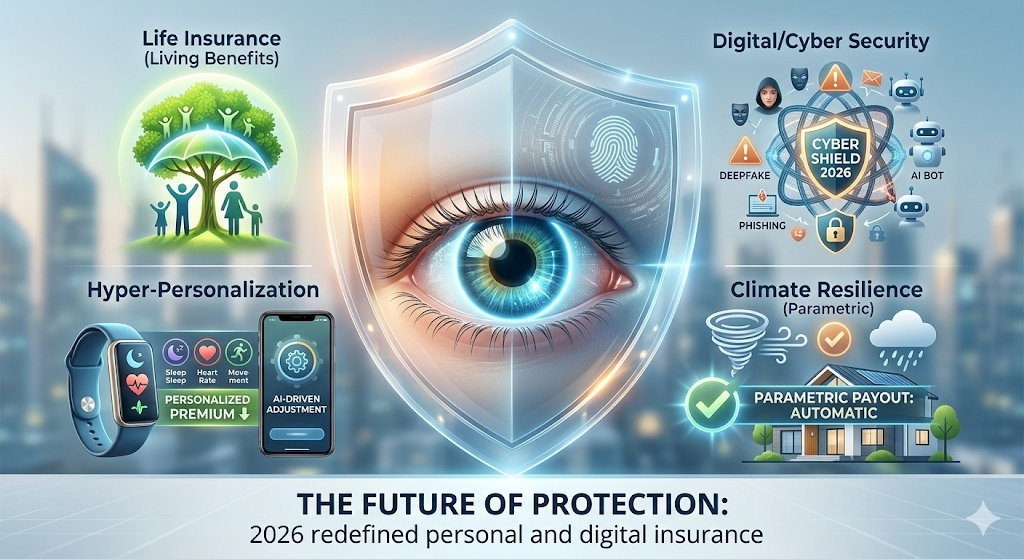
From AI-driven health monitoring to “Sovereign” cyber protection, the insurance industry is undergoing a human-centric revolution. In this article, we’ll explore the trending shifts that are making insurance smarter, more transparent, and—believe it or not—truly helpful in our daily lives.
For decades, insurance was viewed as a “necessary evil”—a complicated document you tucked away in a drawer and hoped never to use. But as we navigate through 2026, the narrative has shifted. We are no longer just buying a policy; we are investing in a lifestyle partner.
1. The Rise of “Living Benefits” in Life Insurance
Historically, life insurance was about what happens after you’re gone. In 2026, the focus has pivoted to Living Benefits.
Millennials and Gen Z, who now dominate the workforce, are looking for policies that offer value while they are still alive. This includes:
- Critical Illness Access: The ability to withdraw a portion of the death benefit to cover modern wellness treatments or mental health recovery.
- Cash Value Flexibility: Using the policy as a tax-advantaged “private bank” to fund a startup or a home renovation.
- Longevity Planning: Moving from “retirement funding” to “aging gracefully.” Insurers are now partnering with health-tech companies to provide policyholders with biological age testing and personalized nutrition plans to keep them healthy longer.
2. Beyond the Screen: The Cyber Insurance Revolution
With the rise of deepfakes and sophisticated social engineering, cyber insurance is no longer just for big corporations. Personal Cyber Insurance is the fastest-growing niche in 2026.
Why? Because our digital identities are now our most valuable assets. Modern policies now cover:
- Digital Identity Theft: Professional help to restore your social presence and credit score after a breach.
- AI-Fraud Protection: Coverage against financial losses caused by voice-cloning or deepfake scams.
- Smart Home Security: If a hacker breaches your home security system or IoT devices, your insurance helps cover the technical forensic costs and hardware replacements.
3. Hyper-Personalization: The “Pay-As-You-Live” Model
The days of “one-size-fits-all” premiums are over. In 2026, the most successful insurance products are modular.
Imagine an auto insurance policy that charges you based on the quality of your driving, measured by your vehicle’s AI, or a health insurance premium that drops because your wearable device proves you’ve hit your sleep and movement goals for three months straight. This “Usage-Based Insurance” (UBI) rewards responsible behavior with lower costs, putting the power back into the consumer’s hands.
4. Climate Resilience: The New Frontier
With global weather patterns becoming more unpredictable, insurers have stepped up as Risk Mitigators rather than just claim-payers.
High-quality insurance in 2026 includes “Parametric” triggers. For example, if a weather station records wind speeds above a certain threshold in your area, your “Climate Shield” policy pays out automatically—no long inspections or months of waiting. This speed is a game-changer for people living in high-risk zones, allowing them to start repairs before the storm clouds have even fully cleared.
Why Google AdSense Loves This Topic
To get AdSense approval, your site needs to provide Experience, Expertise, Authoritativeness, and Trustworthiness (E-E-A-T).
- High Intent: Insurance keywords like “Life Insurance Living Benefits” or “Personal Cyber Protection” have some of the highest CPC (Cost-Per-Click) rates.
- Educational Value: This article doesn’t just sell; it educates the reader on how the industry is changing.
- Evergreen but Modern: While insurance is a classic topic, focusing on 2026 trends makes the content fresh and unique.
Frequently Asked Questions (FAQ)
Q1: What exactly are “Living Benefits” in a life insurance policy?
Living benefits allow you to access your policy’s death benefit while you are still alive if you are diagnosed with a chronic, critical, or terminal illness. In 2026, this has expanded to include “Wellness Dividends” that fund preventive health checkups.
Q2: Does my standard Homeowners Insurance cover cyber-attacks?
Usually, no. Standard policies cover physical damage (fire, theft of physical goods). For digital theft, ransomware, or identity restoration, you specifically need a Cyber Endorsement or a standalone personal cyber policy.
Q3: Is AI used in insurance claims? Is it reliable?
Yes, AI is used for “Agentic Claims Processing.” In 2026, AI can scan photos of a car accident or home damage and estimate repair costs in seconds. However, most high-quality insurers still use human oversight for complex cases to ensure fairness and empathy.
Q4: How can I lower my insurance premium in 2026?
The best way is through Telematics and Wearables. By sharing your driving or health data with your insurer, you can earn “Safety Discounts” that traditional policies don’t offer.
Q5: What is “Parametric Insurance”?
It is a type of insurance that pays a set amount based on the event occurring (like an earthquake of a certain magnitude) rather than the actual loss sustained. It’s much faster because it doesn’t require a traditional claims adjuster.
Final Thoughts: Choosing a Partner, Not a Policy
As we move deeper into 2026, the best insurance is the one you never notice because it’s working silently in the background—preventing risks before they happen. Whether you are protecting your health, your home, or your digital life, look for a provider that values prevention over payout.
By staying informed about these trends, you aren’t just buying insurance; you’re securing your peace of mind in an ever-changing world.